6 Ways to Freshen Up Your Finances for Spring

Planning And SchedulingSpring has arrived, and so have the inevitable seasonal cleaning duties. In addition to packing away the winter clothes, washing windows, and cleaning out the fridge, spring is the perfect time to evaluate your financial situation and tidy up your budget, accounts, debt, and investments.

Here are six ways to spruce up your finances for Spring:

1. Refresh your budget. If you’ve been promoted, transitioned from two incomes to one, or are starting a family, this is the perfect time to revisit your household budget. Consider using online personal finance tools to help you set a budget and keep track of your accounts. You’ll see where your money is going and can adjust spending where needed to help you attain your financial goals.

2. Pay off holiday debt once and for all. Clear up your credit lines, and pay off the purchases you made over the holiday season. Put yourself on a stricter debt payoff plan specifically to pay off the debt you accumulated over the holidays. Cleaning up this debt quickly will put you in a much better financial position for the rest of the year. It’s easy to fall back in to debt, so put a plan in place while you’re at it to maintain a zero balance.

3. De-clutter your countertops and go paperless. A good way to cut down on clutter is to opt for electronic bill payments. It decreases the amount of print mail, helps the environment, and can even help prevent identity theft. Secure your online bill payment with strong passwords that you change on a regular basis. Signing up for your financial institution’s online automatic pay system, (helpful for fixed-payment bills such as cable and Internet) usually even allows you to set up payments as “recurring” so the bills are automatically paid. This can help you avoid forgetting to pay a bill, and it keeps your countertops paper-free.  And don’t forget about switching to e-statements instead of paper statements too!

4. Clean up your credit score. Boosting your credit score is always important, but before you do, it’s imperative to learn about your credit history and the various accounts that affect it. To make sure your credit report is free of errors, get a free credit report (you’re entitled to one free copy from the three credit bureaus every year). Check for any errors or accounts listed that aren’t yours. Companies do make mistakes, and it’s your responsibility to make corrections when you catch them, so your credit score isn’t accidentally lowered.

5. Set up an emergency fund. Life is full of unexpected surprises. A car repair, illness, or unemployment can catch you and your family off-guard and leave you financially stranded. When the unexpected happens, it’s important to have some cash set aside in an emergency fund. At a minimum, it should hold three months’ worth of your living expenses. If you pay $2,000 a month to cover the basics such as housing, utilities, and food, then put aside $6,000 in your emergency fund. If you have dependents, your emergency fund should consist of six months of your living expenses.

6. Dust off your financial statements. Review your bank and credit card statements as well as bills, to make sure you’re not being charged fees you don’t recognize or paying for subscriptions or services you never use. This is also a great time to look at your insurance policies.

Whether it’s putting money aside to pay down debt, planning for the future, or just getting organized, the changing season is a great time to change up your financial habits.

Article Source: Holly Perez of Money.USNews.com, http://money.usnews.com/money/blogs/my-money/2014/03/26/6-ways-to-freshen-up-your-finances

7 Smart Ways to Take Advantage of Your Tax Refund

taxes08Tax season is often a time of stress for many, but it can be a joyful time for the roughly 75 percent of Americans who do receive income tax refunds.

While the refund really means you’re getting back money you loaned to the government at no interest, in practical terms it often means an unexpected infusion of cash into your wallet or bank account. It’s a great problem to have, but what should you do with your windfall?

The best choice for one person may not be the best choice for another. But experts agree on one thing – if you have debt, apply your refund to paying it off, whether it’s credit card debt, student loan debt, or other consumer debt.

If you’re getting a big refund ­– a check in the ballpark of $1,000 or more for taxpayers who don’t have a side business – consider adjusting your withholding so that you’ll have that money available to you during the year.

Here are the seven smartest things you can do with your refund:

Pay down debt. If you have any consumer debt – student loans, credit card balances or installment loans – pay those off before using your refund for any other purpose. Car payments and mortgages aren’t in this category, but you can also consider paying extra on your principal.

Add to your savings. Can you really ever save enough? You can use the money to build up your emergency savings, your kids’ college fund, or put it toward a specific goal, such as buying a house or a car, or financing a big vacation you’ve been dreaming about taking.

Add to your retirement accounts. If you put $2,500 from this year’s tax refund into an IRA, it would grow to $8,500 in 25 years, even at a modest 5 percent rate of return, TurboTax calculates. If you saved $2,500 every year for 25 years, you’d end up with more than $130,000 at that same 5 percent rate of return!

Invest in yourself. This could mean taking a class in investing, studying something that interests you, or even taking a big trip. Think about doing something that might add value to your life, such as taking a photography class or purchasing a special camera that could become a new hobby and potentially a side business in the future.

Improve your home. Consider putting your refund to good use by adding insulation, replacing old windows and doors, or other improvements that are more energy efficient. Or perhaps it’s time to remodel your bathroom or kitchen. You’re adding value to your home, and at the same time you’re improving your living experience too.

Apply your refund toward next year’s taxes. This is common among self-employed taxpayers, who are required to pay quarterly taxes since they don’t have taxes withheld. By applying any overpayment toward upcoming tax payments, you can free up other cash.

Splurge on something you’ve always wanted to do. If you’re out of debt and have substantial savings, this may be the time to take the cruise to Europe or trip to Thailand that you’ve always dreamed of taking. Such an experience can be life-changing, and you never know what impact it will have on your future until you actually do it.

Article Source: Teresa Mears for US News, http://money.usnews.com/money/personal-finance/articles/2014/03/28/7-smart-ways-to-take-advantage-of-your-tax-refund

8 Foolproof Ways to Grow Your Savings

Money plant over white backgroundA typical emergency fund should contain at least six months’ worth of net income (up to a year is recommended if you have kids or other dependents), and you should only touch it in a true emergency (no, under no circumstances is your dream vacation to Tahiti a true emergency).

Here are five examples of situations that qualify as actual financial emergencies:

  • Emergency 1: You’ve lost your job and need to continue paying rent, bills, and other living expenses.
  • Emergency 2: You have a medical or dental emergency.
  • Emergency 3: Your car breaks down and it is your primary form of transportation.
  • Emergency 4: You have emergency home expenses. For example, your air conditioning unit breaks down in 100-degree weather, your roof is leaking, your basement is flooded (no again, a kitchen in need of redecorating doesn’t count, no matter how much you hate that wallpaper or your “outdated” cabinets).
  • Emergency 5: You have bereavement-related expenses, like travel costs for a family funeral.

Here’s another reason why you should always have money in an emergency fund: If you don’t, and one of these five situations occurs, you’ll most likely be stuck using a credit card to handle it, leading you into (or deeper into) credit card debt. In fact, medical expenses are the leading contributor to credit card debt, with low-to moderate-income households averaging $1,678 in credit card debt due to out-of-pocket medical expenses.

Plus, paying for emergency expenses on your credit card (if you don’t pay off your bill immediately) will end up costing you more over time, when you rack up interest payments as you try to dig yourself out of debt. Having an emergency fund will not only save you more money in the long run, but it will also give you peace of mind in knowing you have the safety net to catch those unexpected curveballs when they arrive.

If getting six months of take-home pay together seems daunting, here are eight useful tips that might better help you boost your emergency savings:

1. Direct Deposit into Your Savings

Think of yourself as a regular monthly bill you have to pay. All you have to do is arrange to have a set amount of money directly deposited from your paycheck into a savings account each month. The savings account is recommended because if you use your checking account, you may be tempted to spend the money you are trying to set aside. It might hurt a bit at first to take home a little less every month, but after awhile you won’t even notice it’s gone. Here’s a moment when the “set it and forget it” strategy works wonders!

2. Never Spend a Bonus Again

It feels great to be rewarded for your hard work. And it feels even better to spend that hard-earned bonus on something you’ll enjoy, like a trip to the Caribbean or a new tablet. At the same time, the pleasure of a vacation or new gadget is short-lived compared to financial security.

So make a pact with yourself to put every bonus you get from here on out to good use. If you direct 90 percent of your bonuses straight into your savings account as a rule, you’ll still have 10 percent to treat yourself with (plus the comfort of knowing that you’re building a well-earned safety net).

3. Cut Unnecessary Costs

This seems like an obvious one — and is easier said than done. Actually, most people spend money on more unnecessary items than they think. So take time to look at where your money is going in detail and begin to cut back. Saving $10 here and $5 there could help you put a lot away in the long run – you’d really be surprised.

4. Open a Seasonal Savings Account

Many financial institutions offer seasonal accounts meant to save for the holidays. These accounts give you reduced access to your accounts, charging a penalty each time you withdraw more than permitted. Since emergencies (hopefully) don’t occur often, a seasonal account could make sure you’re touching it only when needed.

Check out First Financial’s Holiday Savings Club Account – don’t put yourself into debt over holiday spending, save ahead and come out on top (and not in debt)!*

  • Open at any time
  • No minimum balance requirements
  • Dividends are posted annually on balances of $100 or more
  • Accounts automatically renew each year
  • Deposits can be made in person, via mail, payroll deductions, or direct deposit
  • Holiday Club funds are deposited into a First Financial Checking or Base Savings Account

5. Sell Unused Items

Rather than throwing these unused goods away, start selling them, and put that money into your emergency fund. All you need to do is post them to a site like eBay, Craigslist, or Amazon and you can get rid of items from the comfort of your home. You can also take your clothes to a consignment shop to have them sold for you.

6. Stop Spending $5 Bills

Instead of saving your pennies, put aside any $5 bills that come your way. Never spend a $5 bill again, and you’ll be surprised by how quickly this little trick will help you come up with a few hundred dollars to add to an emergency fund.

7. Earn Extra Income

You could pick up odd jobs to help do things for other people, freelance writing/blogging, or babysitting via websites like TaskRabbit.com, DoMyStuff.com, Elance.com, FreelanceSwitch.com, or Sitters.com. Or if you have the time – go out and find an additional part-time job as a cashier, server, or utilize your hidden talents in web design, catering, and so on.

8. Use Cash Back Rewards

If you get a cash-back reward for any spending on your credit card, just make it a rule that those dollars will be dedicated to your emergency fund. It may only add up to $100 extra each year, depending on your spending, but every little bit counts!

*A $5 deposit in a base savings account is required for credit union membership prior to opening any other account. All personal memberships are part of the Rewards First program and a $5 per month non-participation fee is charged to the base savings account for memberships not meeting the minimum requirements of the program. Click here to view full Rewards First program details. Accounts for children age 13 and under are excluded from this program.

new%20ncua%20disclaimer-resized-600

Help – I spent too much on the holidays and I’m still paying for it months later!

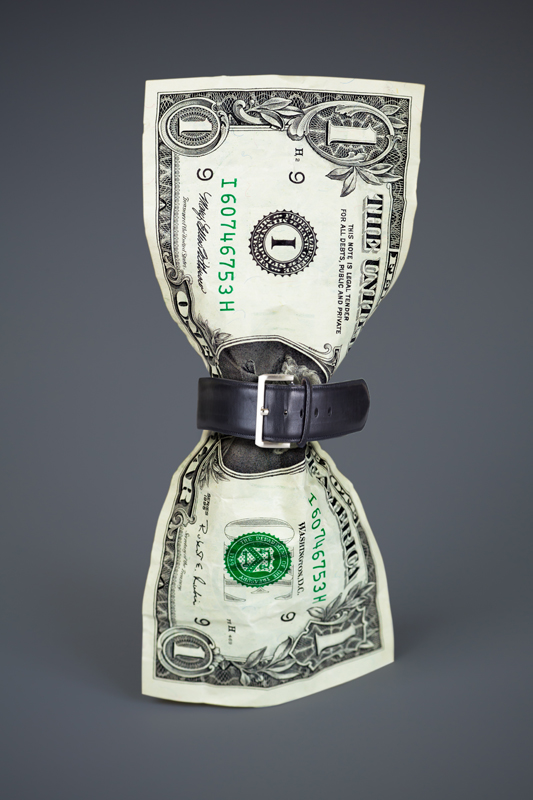
tighten belt on dollar conceptIf the holidays have left your budget overstretched, there are ways to recover (even if 3 months have passed) … you just need to act as quickly as you can.

While it might be tough to admit it (case in point: you’ve ignored the debt you racked up over the last few months), the first step to reducing your post-holiday debt is realizing and prioritizing it.

Beverly Harzog, author of Confessions of a Credit Junkie, says the best way to start a re-payment plan is to go after the debt on the highest interest rate card first and once that is paid off, go after the next one and so on and so on.

If you overspent this holiday season and know you won’t be able to pay off your credit card bills when they arrive next month, you need to adjust your spending habits ASAP.

Consumers should look at their spending categories and aim to shave small amounts off of each area (even if it’s $5 or $10 to start). Making many small cutbacks will be less painful than trying to find an extra $1,000 all at once to help pay off the credit card balance.

If you put a lot of your holiday gift spending on a high-interest rate credit card, Harzog recommends transferring the balance to a credit card with a lower interest rate. Even if you can reduce the interest rate just a little bit, it will help pay it down faster.

If you are facing significant debt, it might be time to find new ways to generate extra income that is earmarked solely to paying off the debt. If you don’t want to get a traditional part-time job, review your talents and skill set to find alternative ways to make money, whether it’s giving piano lessons, fixing computers, catering, or doing web design.

Ed Gjertsen, Vice President at Mack Investment Securities, recommends the seven-day cash challenge to break an overspending habit. With this challenge, you estimate how much money you spend each week and then take out that amount of cash at the start of the week and see how long it lasts.

“When people do this, by Wednesday or Thursday they are usually out of money,” he says. “They don’t think of all the times they swipe that card. It gives them a reality check of how much they are spending.”

new%20ncua%20disclaimer-resized-600equal%20housing%20lender%20logo-resized-600

Money Mistakes to Avoid in Your 20s and 30s

MED0000815When you’re in your 20s and 30s, you think you’ll have all the time in the world to save, plan for retirement, and worry about the future.  But the truth is, if you don’t set yourself up financially during this crucial time in your life – it may be too late by the time you realize that you should’ve started much earlier.  Read on to find out the important financial decisions you should start thinking about as soon as you land that first full-time job.

Mistake #1 – Not contributing to your retirement. Start saving for retirement when you start your first job. Don’t make the common mistake of thinking retirement is too far away and you only have to be saving for immediate needs at this point. The end result – you will often wind up spending your entire salary, if you don’t make payroll deductions going into your savings.  It’s important to start saving for retirement while you are young, so you can get ahead.  If your employer offers a retirement plan like a 401(k) – oftentimes you can make direct contributions (a percentage of your salary that you set right from your paycheck) to go into a retirement fund, and you won’t even know the money is coming out of your paycheck.

Mistake #2 – Buying more car than you can afford. Be careful about thinking that just because you are now working and have a full-time job in the real world, that you can afford to buy a luxury vehicle, take elaborate vacations, or purchase an expensive new wardrobe.  But they’re work clothes and will be put to good use, right?  Wrong.  Create a budget for yourself, buy only what you actually “need,” and stick to your financial plan.

Mistake #3 – Not starting an emergency fund. Do not put this off, because you think you won’t need it.  Always plan for the unexpected.  What would happen if you lost your job or an emergency situation occurred – would you have enough in savings to pay rent, make car payments, or pay your bills?  Saving for that rainy day is extremely important.

Mistake #4 – Living on credit cards. Many 20 and 30-somethings play the dangerous game of living high on credit cards and emptying any savings they have from the previous month to pay for it. Credit cards can cause someone to live paycheck to paycheck and rack up enormous debt if you aren’t careful.  If you do need to use a credit card, try to use it sparingly and pay the bill each month.  Don’t live outside of your means.

Mistake #5 – Not setting financial goals. Stop to think about what you might like to do in five or ten years. Do you want to own a home? You might not be thinking about it right now, but should you get married and decide to purchase a home, don’t you want to have some savings from your working years to contribute? Be sure to save something (even if it’s not a huge amount), and set some financial goals for your future. Your future home may very well be the biggest purchase of your life, so it’s definitely important to start saving as soon as possible.

Mistake #6 – Trying to keep up with the Joneses. Don’t make the mistake of thinking you have the funds or budget of your parents. They most likely have a different budget than you and it may very well have taken them over 30 years to accumulate what they have, and you probably aren’t at that point yet. Live within your means – and stick to a budget of what you can afford.

Mistake #7 – Not starting the habit of paying yourself first. Save first – save something, even if it’s a small amount, and then concentrate on your bills. When you simply pay only your bills and leave nothing for your savings, it will take a long time to catch up. Save AND pay your bills – you’ll stay ahead of the curve.

Mistake #8 – Owing too much in student loans without learning about career prospects. Be careful about what you choose as your major and the price tag of the college you select.  Will there be jobs available in your field when you graduate, to help you pay down those student loans?  For example – going to an Ivy League school and majoring in say, Philosophy – is that really practical?  What will you do with that degree after graduation, and how will you pay for it?

Mistake #9 – Going into debt for a wedding. With wedding costs skyrocketing, it makes sense to manage this event carefully. You don’t have to elope to cut costs; there are plenty of ways to have an awesome day for a fraction of the price. Try Pinterest, for starters.

Mistake #10 – Not carrying health insurance. The young feel invincible, but all it takes is one small accident to start the downward spiral of medical bills.  And we’re not talking a couple thousand – we’re talking potentially tens of thousands of dollars.  Be very careful of this one!

If you start out on the right foot in your 20s and early 30s – set and stick to a budget, save some money, and prepare for your future … you’ll be smooth sailing into your late 30s and beyond, and prepared for a rainy day and your future retirement.  Though you might not be thinking about all of this now, if you don’t prepare – when the time comes you’ll truly wish you had, and it will be difficult to catch up (if ever).

However, if you’re reading this article in your late 30s and 40s and you’ve made some of the mistakes listed above – First Financial can help.  We encourage all our members to stop in and see us at least once a year to have an annual financial review with a financial representative. 

Don’t forget to think first – and think savings!

Jackson Memorial Students Get Taste of Financial Reality

Tri-Town News article by Andrew Martins:

DSCN0228Financial independence can be a scary thing for young adults who are beginning to make their own way in life after graduating from high school or college. Unexpected costs arise, debt can become bloated, and temptations to spend frivolously crop up every day.

For a group of freshmen at Jackson Memorial High School, the sobering reality of money and adulthood was put on display during an event dubbed the Financial Reality Fair.

“The goal of the fair is to teach the kids the value of money and how to manage their money when they leave high school,” said Issa Stephan, First Financial Federal Credit Union president and CEO. “It is very crucial these days to be financially savvy, and there is a lot of temptation out there.”

Financial responsibility is a subject that Stephan believes should have a bigger focus in public schools. He cited the economic downturn that began in 2008 as a prime example for why such responsibility is imperative for the future.

“I think that since 2008, people are more conscious about money,” he said.

On Jan. 8, students tackled financial issues in a hands-on manner without potentially destroying their credit rating.

“These days, it is easy to get in trouble,” Stephan said. “Twenty years ago, you had to drive to the mall and take your cash to spend it. Now you can be sitting in your bed, clicking yourself away into financial trouble” on a computer.

The idea for the fair, according to First Financial Marketing Manager Jessica Revoir, was based on similar events held throughout the state by the New Jersey Credit Union League Foundation, which sponsored the Jackson Memorial High School event.

DSCN0230Students were initially instructed to choose a career. After each student selected a job, that career’s starting salary after taxes was used as the baseline for a monthly budget. The young adults were informed that some expenses were required, including food, clothes and rent; and some expenses were not required, including gym memberships and vacations.
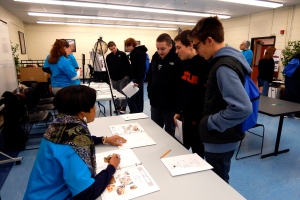
Stephan said the point was to illustrate the importance of determining what is needed and what is not needed.

“If you move out [of your parents’ home], you have to pay rent and insurance, but people usually get in trouble with what I call ‘variable expenses,’ ” he said. “A lot of people see a smartphone as a fixed cost … but it is not. There are ways to make even a necessity much more affordable in the long run. If you shield the students from reality, they fall.”

Stephan said students were led astray on purpose as a means of letting them see the difference between what they want and what they need.

At the transportation booth, for example, a binder was purposely left open at a page featuring luxury cars and sports cars for purchase, rather than being left open at a page with less expensive vehicles or public transportation.

“We are trying to teach these kids that if they let themselves be manipulated financially when they get older, they can get into some serious trouble,” First Financial Investment and Retirement Center Coordinator Samantha Schertz said.

To Lisa Scott, who teaches honors economics and financial literacy, the fair provided an opportunity for her students to take a more tactile approach to learning the importance of finances.

“This really is experiential learning for our kids because, to them, the class is just the textbook and something they need to graduate, but then they come here and realize they need this to live and get through adulthood,” Scott said.

The fair was a sobering realization that made freshman Claudia Besse take a moment to consider her future.

“I learned that I am very grateful for my parents, for one,” Claudia said. “I never realized that your gross pay is not your take-home pay and that there are so many expenses. Cars are so expensive.”

Scott said those realizations are fueled not only because of the way that financial education is traditionally handled in school, but also because some parents provide everything for their children.

DSCN0223“What I am hearing as the kids go through the fair is they ask, ‘Does that cost that?’ A lot of kids don’t have to pay for the things they enjoy right now … so for some kids, this is a revelation,” Scott said.

Stephan said he and his staff hope the students will take what they learned at the event and apply it to their lives.

“I saw some kids calculating and trying to make smart decisions, and I saw others just not caring as much. And that, in a way, reflects society,” he said. “We need to try to catch people before they get into financial trouble.”