
How to Choose a Financial Institution if You’re Growing a Family

If you have a growing family, you’re probably used to making big decisions – some of which might be related to family finances. The financial institution you choose to bank with might not always be top of mind, but it is an important aspect of your family’s financial well-being. Ultimately, where you choose to bank is the place you’ll trust with handling both day-to-day financial needs and future milestones. Consider the following criteria when choosing a financial institution that will grow with and support your family both now and in the future.

Your Short, Medium, and Long-Term Needs & Goals

Financial institutions are not one-size-fits-all. Similarly, your financial needs and goals aren’t either. Your co-worker might swear by a particular online-only bank, but you might prefer a local bank or credit union with a nearby branch. It’s important to consider the day-to-day ways your family currently uses money, as well as how they plan to use money in the future when deciding if a financial institution is a good fit. Identify some of your family’s financial needs and goals so you can consider them as you read through this article.

Here are some financial goals that first-time parents or those with changing family dynamics might consider:

  • Purchasing a family vehicle.
  • Saving for a down payment on a home, or preparing to purchase a home.
  • Establishing or adjusting an emergency fund and budget.
  • Introducing children to saving from a young age.

Product and Service Offerings

Your needs might be limited to certain accounts or services now, but they may change as your family evolves.

Let’s say you need a checking and savings account now, but you and your partner would like to become homeowners in the next 5 years. Does your financial institution have a special offer for first-time homebuyers? Would you like a dedicated representative who can assist you through the mortgage process from application to closing? Or, let’s say you would like to introduce your child to saving at a young age. Does your financial institution have accounts for children? If so, do the accounts have the capabilities and protections you would like in place?

Determining now if a particular financial institution has the offerings needed to support your financial goals, can save you time and effort down the road and also help you develop a long-term relationship with your institution.

Convenience and Accessibility

Convenience and accessibility look different for everyone based on preferences, but make sure your financial institution meets your definition of the two. Your financial institution should make your money management easier, not more stressful. Is your family busy managing hectic schedules, making it difficult to make trips to a branch? Would you prefer a financial institution with local branches to make transactions in person? Would you like a financial institution that has easy-to-use online and mobile banking? Can you view and manage all your accounts online or in the mobile app? Consider what convenience and accessibility mean for you and your family.

The Differences Between Financial Institutions

There are a few broad types of financial institutions you can pick from, and figuring out which might be best for you and your family can help narrow down your search.

  • National Banks: Typically offer a broad range of financial products and services suited for various life stages. They may have many branches and ATMs, offering more accessibility, but potentially less personalized customer service. At a bank there are typically higher account fees and borrowing rates, and lower interest rates on deposits.
  • Community or Regional Banks: Typically have a higher-level of personalized service and local expertise due to their presence in the community in which they operate. They might however, have limited financial products and services, branches, and ATMs compared to larger, national banks.
  • Credit Unions: Not-for-profit financial cooperatives that cater to specific members, such as those in certain counties or states, or who work for certain employers. Since they are member-owned, credit unions typically have lower service fees and loan rates, and higher interest rates on deposits compared to other institutions. Depending on the size, a credit union might have fewer branch locations, but typically will participate in an ATM network so their members can access services in various locations. Credit unions are known for delivering personalized service due to their presence in the community in which they operate.
  • Online-Only Banks: These banks operate exclusively through digital platforms such as online and mobile banking, without any physical branches. Without brick and mortar locations, these banks can typically minimize costs and remain competitive with traditional banks – offering the same products and services with comparable or better loan and savings rates, and fees.

If the search for a financial institution for you and your family leads you to First Financial – visit a local branch, call 732.312.1500, or check out our website to find out how you can become a member today.*

*A First Financial membership is available to anyone who lives, works, worships, volunteers or attends school in Monmouth or Ocean Counties. A $5 deposit in a base savings account is required for credit union membership prior to opening any other account. Other terms & conditions may apply, see credit union for details.

90 Years Strong: Why Banking Local Still Matters

In a financial world that’s increasingly digital, fast-moving, and impersonal, one thing has never gone out of style: people helping people.

That simple idea is what sparked the creation of credit unions nearly a century ago, and it’s the same principle that continues to guide First Financial as we prepare to celebrate 90 years of service today on February 6th!

Pictured above: Tellers and members from our first branch location in Asbury Park, NJ when we were Monmouth County Teachers FCU.

Where Credit Unions Began

Credit unions were born out of necessity. In the early 20th century, many working families and small business owners were shut out of traditional banking. Loans were hard to access, savings options were limited, and financial support often depended on who you knew, not what you needed. Credit unions changed that.

Built by communities, for communities – credit unions were designed to be member-owned, not profit driven. Their mission was clear – to provide fair, affordable financial services and help people build stability, security, and opportunity. That mission still matters today.

The Power of People First Banking

While technology has transformed the way we bank, the value of local, relationship-based financial institutions has only grown stronger.

At First Financial, “putting people first” isn’t just a phrase or a tagline, it’s how business gets done every day. When you become a member, that means you’ll receive:

  • Personal service from people who know your name, your financial goals, and your community.
  • Thoughtful lending decisions made locally, not by algorithms or distant headquarters.
  • Financial guidance rooted in trust, not just transactions.

When you walk into our credit union or connect with us online, you’re not just an account number: You’re a member. An owner. A neighbor.

Investing Where It Matters Most

Local banking keeps dollars circulating close to home. Credit unions are known to reinvest in the communities they serve – supporting local businesses, non-profits, schools, and families. Every loan, every account, and every financial decision contributes to a stronger local economy.

Over the past 90 years, First Financial has grown alongside the people and communities it serves, adapting to changing needs while staying rooted in the same cooperative values that sparked its founding.

Trust Built Over Generations

For nine decades, members have turned to First Financial during life’s biggest moments – buying a home, starting a business, planning their future, and navigating unexpected challenges. Those relationships span generations, creating a legacy of stability and care that larger institutions typically can’t replicate. In an era when financial choices can feel overwhelming, having a trusted local partner makes all the difference.

Honoring the Past, Building the Future

As we celebrate our official 90th anniversary, we’re taking time to reflect on where we’ve been and where we’re going.

This milestone isn’t just about longevity. It’s about resilience, adaptability, and staying true to the values that matter most. Throughout the year ahead, we’ll be celebrating this anniversary with member stories, special promotions, and moments that honor our history while looking toward the future. You can find out all the ways we’ll be celebrating 90 years on our website, which will continuously be updated throughout 2026.

Why Banking Local Still Matters

Ninety years strong is more than a milestone, it’s a reminder that when financial institutions are built on trust, service, and community – everyone benefits. Local decisions create lasting impact, and when people come together with a shared purpose – they can build something that lasts for generations.

Thank you for being part of our story. Here’s to 90 years, and many more to come!

Want to learn more about our journey? Explore our history and the people-first values that have guided us for 90 years.

Not a First Financial member yet but want to join us? First Financial membership is open to anyone who lives, works, worships, volunteers, or attends school in Monmouth or Ocean Counties in New Jersey. Learn more about getting started on our website, or stop into any of our branch locations.

*A First Financial membership is available to anyone who lives, works, worships, volunteers or attends school in Monmouth or Ocean Counties.  A $5 deposit in a base savings account is required for credit union membership prior to opening any other account. All personal memberships are part of the Rewards First program and a $5 per month non-participation fee is charged to the base savings account for memberships not meeting the minimum requirements of the program. Click here to view full Rewards First program details. Some restrictions apply, contact the Credit Union for more information.

Celebrating 89 Years: Why Banking with a Credit Union is the Right Choice

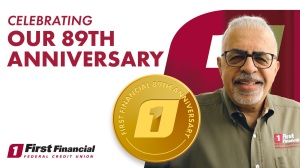
“We thank our valued members for their continued support, loyalty, and membership with us over the past 89 years. Our commitment to serving their financial needs is our top priority today and everyday.” -Issa Stephan, President/CEO (pictured above).

Today marks an exciting milestone for First Financial Federal Credit Union — we’re celebrating 89 years of service! Since we were founded back in 1936, we’ve remained committed to providing members with financial solutions that prioritize their needs. As we honor our history, we also recognize why credit unions like ours continue to be a great choice to help manage your financial future.

A Brief History of Credit Unions

The concept of credit unions dates back to 1849 when Friedrich Raiffeisen established the first cooperative lending institution in Germany, designed to provide financial access to underserved communities. By 1900, word had spread all the way to Quebec, Canada, where Alphonse Desjardins founded the first cooperative financial institution in North America. The concept was soon adopted by Pierre Jay, the Finance Commissioner of one of America’s great pioneer states – Massachusetts.

In the United States, credit unions gained traction in the early 20th century, leading to the passage of the Federal Credit Union Act in 1934, by President Franklin D. Roosevelt – which allowed for the creation of federally chartered credit unions nationwide. Over the years, credit unions have grown into trusted financial institutions that continue to put people over profits, offering their members a community-focused alternative to traditional banking.

The Story of First Financial

First Financial’s roots trace back to 1936 during the Great Depression, when a group of Asbury Park schoolteachers came together to form Monmouth County NJ Teachers Federal Credit Union. Under the leadership of Harold “Pop” Shannon, the credit union expanded to include employees of the Monmouth and Ocean County Boards of Education. Over time, our membership grew to include municipal employees, hospital workers, and small businesses – leading to several name changes to reflect our evolving community.

In 2003 we became a community credit union – serving anyone who lives, works, worships, volunteers, or attends school in Monmouth or Ocean Counties. In 2006 we adopted our current name, First Financial Federal Credit Union – continuing our tradition of providing excellent financial services while keeping our members’ best interests at heart.

Why Bank with a Credit Union Instead of a Traditional Bank?

Credit unions are typically not-for-profit, member-owned financial institutions – which means they can offer higher interest rates on savings, lower fees on loans, and generally more personalized service compared to the shareholder profit of banks.

  • Fewer Fees & More Flexibility – Credit unions prioritize service over profit, meaning you’ll encounter fewer fees and more flexible account options.
  • Lower Loan Rates – Because credit unions are member-owned and not-for-profit, they return earnings to members in the form of lower interest rates on loans.
  • NCUA Insurance Protection – Just like banks are insured by the FDIC, federally insured credit unions are backed by the National Credit Union Administration (NCUA). Member deposits are protected up to $250,000, ensuring financial security and peace of mind.

Exclusive Member Benefits at First Financial

When you partner with First Financial, you gain access to exclusive member benefits that increase the more you bank with us. Our members enjoy:

  • Referral Programs
  • Savings on Tax Services
  • Sweepstakes Opportunities
  • Relationship Banking Discounts
  • Notary Services
  • Reduced Loan Rates
  • No-Cost Financial Consultations
  • And so much more that you won’t find at a traditional bank!

Join Us in Celebrating 89 Years of Member-Focused Banking

For 89 years, First Financial has been dedicated to serving our members and the local community. As we celebrate this milestone, we invite you to experience the credit union difference firsthand. If you’re not already a member, now is the perfect time to make the switch and enjoy the financial advantages of banking with a credit union. For more information on our services or to become a member, call us at 732.312.1500 or visit a branch today!

*A First Financial membership is available to anyone who lives, works, worships, volunteers or attends school in Monmouth or Ocean Counties. A $5 deposit in a Base Savings Account is required to establish membership prior to opening any account/loan. See credit union for details.

A Guide to Green Finances in Honor of Earth Day

In celebration of Earth Day next week, First Financial is thrilled to share some principles of environmental stewardship with smart financial management. Adopting a green lifestyle doesn’t just contribute to the planet’s health — it can also bolster your financial well-being. Here’s how making eco-friendly choices can lead to savings and a more sustainable future.

Embrace Green Banking

As part of your journey to green finances, consider digital banking options. Online statements, mobile banking, and electronic bill pay reduce the need for paper, helping to conserve resources. First Financial offers a range of online banking services designed to make managing your finances convenient and environmentally friendly.

Merge Eco-Friendly Living with Savvy Spending

The path to a greener planet and a thicker wallet starts with small, daily decisions. Contrary to the myth that eco-friendly living is costly, embracing sustainability can actually cut your expenses. Simple acts like drinking from a reusable water bottle or cooking meals at home – not only saves you money, but also reduces your environmental footprint. By aligning your financial decisions with your green values, every dollar you spend (or save) supports a healthier planet.

Energy Efficiency: The Bright Idea

Switching to energy-efficient appliances like LED bulbs can slash your energy bills and carbon footprint simultaneously. ENERGY STAR-labeled appliances in particular, meet high energy efficiency standards. Remember, conserving energy isn’t just about upgrading your gadgets – it’s also about everyday habits. Turning off lights when you leave the room, unplugging idle electronics, and fixing leaks can make a big difference in your utility bills and resource conservation.

Rethink Your Ride

Eco-friendly transportation methods like carpooling, public transit, and electric vehicles reduce emissions and save money on fuel. For short distances, consider biking or walking — not only are these options cost-free, but they also offer health benefits. If your job allows remote work, see if you can work from home a portion of the week to cut down on commuting costs and decrease your environmental impact.

Waste Not, Want Not

Minimizing waste goes hand in hand with maximizing savings. Ditch single-use plastics for reusable alternatives, buy in bulk to reduce packaging waste, and embrace recycling and composting. Before tossing something out – think about whether it can be repaired, repurposed, or donated. These practices not only lessen your environmental impact but can also inspire a more mindful and economical lifestyle.

Earth Day Every Day

Making eco-friendly choices in your finances and lifestyle doesn’t just celebrate Earth Day — it honors our planet every day. By integrating these green practices into your life – you’ll not only contribute to a healthier planet, but also discover new ways to save.

For more personalized financial advice, call 732.312.1500 or visit your local branch today. Don’t miss out on more financial tips – be sure to subscribe to our monthly e-newsletters.

The Difference Between Home Equity Loans and HELOCs

Navigating the financial world can sometimes feel like solving a puzzle. As your financial partner, we want to break it down into simpler terms so you feel empowered with your financial decisions. Many of us have homes, and these homes can be a treasure trove when it comes to financial solutions. Let’s chat about two key ways to harness this potential: Home Equity Loans and Home Equity Lines of Credit (HELOCs).

Home Equity Loans vs. HELOCs: A Quick Breakdown

Both of these options revolve around tapping into your home’s value – that’s the difference between what your home’s worth now and what you owe on your mortgage.

Home Equity Loans: Think of this as a one-time deal. You get a lump sum of money and pay it back in fixed installments. The interest rate? It stays the same for the life of the loan.

HELOCs: Picture this like a credit card, but tied to your home’s value. You can borrow money when you need it and repay it. However, the interest rate can change over time and is variable since it is tied to Prime Rate.

While both can be handy tools for homeowners for things like paying for renovations, consolidating debt, and to help pay college tuition – it’s essential to remember that since your home backs these options, there can be a lot at stake.

How Credit Unions Can Help

It’s no secret that the housing market’s been a bit of a roller-coaster lately, but credit unions are standing strong – ready to help you navigate. We’re here not just to offer financial help, but also to give you the lowdown on the best choices for your situation.

Home equity loans have become a hot topic. They offer homeowners a chance to tackle various financial needs, especially in these unpredictable times. With household debt on the rise, HELOCs are emerging as a lifeline for many and can offer a cushion against economic bumps.

The heart of our mission here at First Financial is to keep you informed. We want you to know all the ways you can use the equity in your home. We’ve made it more convenient than ever to explore your options. Gone are the days of endless paperwork and waiting weeks for loan approvals. Visit us on the web to apply online, 24/7.

Home Equity Loans and HELOCs are tools that can open doors to financial flexibility. And credit unions? We’re your friendly guide. With a mix of education, technology, and our unwavering commitment to you – we’re here to empower your financial journey.

To learn more about your Home Equity Loan* or HELOC** options as a First Financial member, call 732.312.1500 Option 4 or visit one of our branches.


*First Financial FCU (FFFCU) will waive Home Equity Loan closing costs at inception of loan. If loan is terminated within the first 2 years of opening, closing cost waiver is revoked and the borrower(s) will be required to pay back closing costs in full to FFFCU. A First Financial membership is required to obtain a Home Equity Loan, and is open to anyone who lives, works, worships, volunteers or attends school in Monmouth or Ocean Counties. See FFFCU for details or visit firstffcu.com for all current rates. Home Equity Loan rates for financing up to 80% of appraised value less other mortgages.

 **Home Equity Line of Credit LTV up to 70%. LTV= Loan to Value Ratio. Rates will vary with the market based on Prime Rate and may change quarterly. Subject to credit approval. Available on primary or secondary homes only. A First Financial membership is required to obtain a home equity line of credit, and is open to anyone who lives, works, worships, volunteers or attends school in Monmouth or Ocean Counties. Subject to underwriting guidelines. See credit union for details.

Debunking Common Financial Myths

In the world of personal finance, there are myths and misconceptions that can hinder our ability to make informed decisions and achieve our financial goals. By debunking these myths, we can gain clarity and navigate the complexities of personal finance more effectively. Keep reading as we explore common financial myths and the truth behind them!

Myth 1: Credit unions are just like banks.

Reality: Credit unions are member-owned, not-for-profit financial institutions. Credit unions prioritize the best interests of their members rather than generating profits for shareholders. At First Financial, for example – you can benefit from lower loan rates, personalized customer service, and access to a wide range of financial products tailored to meet your unique needs.*

Myth 2: Paying the minimum on your credit card statement is fine.

Reality: Paying the minimum balance on your statement actually costs you more in the long run. You’ll end up having to spend more on interest this way, which could double the cost of the items you purchased. Paying your credit card statement on time and in full every month can help improve your credit score and save money on interest too. See our handy guide on credit card mistakes to avoid to learn more.

Myth 3: Saving money is solely about setting cash aside.

Reality: While saving money is essential, there are various strategies to make your savings work harder for you. Exploring different savings products, such as high-yield savings accounts, certificates of deposit (CDs), or individual retirement accounts (IRAs) – can help you grow your savings over time and work towards your financial goals.

Myth 4: Loans are only for emergencies or significant purchases.

Reality: Loans can serve multiple purposes beyond emergencies or large purchases. They can be valuable tools to seize opportunities, consolidate debt, or invest in personal or business ventures. Understanding the different loan options available and their terms, can help you make informed decisions that align with your financial objectives.

Myth 5: Retirement planning is only for the wealthy.

Reality: Retirement planning is crucial for individuals at all income levels. Regardless of your current financial situation, developing a retirement strategy early on can help you secure a comfortable future. Here at our credit union, we offer the First Financial Investment & Retirement Center to help support your future through investments and insurance.**

By debunking these common financial myths, you can gain a better understanding of personal finance and make more informed decisions to achieve your financial goals. Whether it’s exploring savings and loan options, or planning for retirement – taking a proactive approach to your financial well-being is key.

Remember, knowledge is power – and First Financial is here to provide you with all the tools for your financial success. For more insights and tips on personal finance, check out our First Scoop Blog!

*$5 in a base savings account is your membership deposit and is required to remain in your base savings account at all times to be a member in good standing. All credit unions require a membership deposit. All personal memberships are part of the Rewards First program and a $5 per month non-participation fee is charged to the base savings account for memberships not meeting the minimum requirements of the program. Click here to view full Rewards First program details. Some restrictions apply, contact the Credit Union for more information.

 **Securities and advisory services are offered through LPL Financial (LPL), a registered investment advisor and broker/dealer (member FINRA/SIPC). Insurance products are offered through LPL or its licensed affiliates. First Financial Federal Credit Union (FFFCU) and First Financial Investment & Retirement Center are not registered as a broker/dealer or investment advisor. Registered representatives of LPL offer products and services using First Financial Investment & Retirement Center, and may also be employees of FFFCU. These products and services are being offered through LPL or its affiliates, which are separate entities from and not affiliates of FFFCU or First Financial Investment & Retirement Center.

Securities and insurance offered through LPL or its affiliates are: