How to Save $1,000 by the Holidays


Yes, it’s still hot outside and school hasn’t even started yet, but the holiday season is coming. Thanksgiving is roughly four months away, which means if you want to pay cash for those Black Friday bargains instead of charging up your credit card balance, you need a game plan.

The average American spends $1,000 on Christmas gifts. That means if you haven’t started saving yet, you will need to put away $250 per month to make that goal. It might sound like a lot, but there are some tricks that can help you gift yourself a debt-free holiday while making your family’s dreams come true.

Adjust your spending. Sure, this one is obvious, but without a plan it’s not going to happen. Don’t just tell yourself you’ll spend less. Find places where you can trim a little and stick to it. Buy whole foods instead of pre-cut veggies or processed foods. That could save you $50 or more per month from your grocery bill. Also, take your friends and co-workers up on their offers of free zucchini and cucumbers from their gardens. You could also trim $25 from your entertainment budget and $25 from clothes. Put $25 worth of items you don’t need back on the shelf during one Target run, and you’ve just saved $125 for the month.

Increase your income. Summer is ripe with ways to make a few extra bucks. Have a garage sale. Start a pet-sitting or houseplant/garden watering service for family and friends on summer vacation. Finally, open that Etsy storefront you’ve always talked about.

Start your holiday shopping now. If you take advantage of bargains throughout the year, you won’t be pressured into spending $1,000 all in one month. Buying a gift on sale now is even more helpful to your budget than saving money to buy something full price in December.

Article Source: Heather Anderson for Financialfeed.com

4 Ways to Save Money on Meals While Hosting Out of Town Family

When you live on the other side of the country from your extended family, it’s a special treat when they come to spend a few weeks with you. Not only do you get to spend quality time together, but you get to show them your neck of the woods and play the role of tour guide too. Hosting and introducing the family to your state or region may be fun, but it can also be really expensive — especially if you’re used to living frugally.

If you have out-of-town family visiting this summer, here are some practical ways to address the financial strain it might create without letting it stress you out or take away from enjoying the time you have with your guests.

1. Start anticipating and stocking up on foods they enjoy.

Everyone has their own favorite go-to products, brands, and eating habits. While your guests may politely eat your organic, all-natural peanut butter, they may be secretly wishing they’d brought their own stash of JIF. It can get expensive to purchase items you don’t normally use just to have them in stock for your guests, but it’s also a part of being a good host who tries to make visitors feel as at home as possible.

To prepare, ask them to get you a list of their favorite snacks and staples and start looking for sales, and digital and print coupons. Purchasing these items on sale will put less stress on your grocery budget while still accommodating your family members’ taste buds.

2. Eat at home as much as possible.

It can be tempting to get carried away by taking everybody to all your favorite restaurants around town. After all, it’s a special occasion! Unfortunately, this can also derail your usual eating out budget much faster than a slightly higher grocery bill, even if you split the tab. The first tip is to make meals at home several nights a week and keep eating out for on-the-go weekend tourist activities. Even if you don’t enjoy cooking or think you’re good at it, choose the few things you do well and your efforts will shine. Grilled burgers with unique toppings or homemade pizzas are a few fun, cost-efficient options.

When you do eat out, focus on restaurants that double as entertainment or ambiance – something memorable, not just your everyday chain restaurant. Since these types of places tend to be more expensive, keep your eyes on Groupon, other deal apps, and local coupons that can save you money. If you haven’t already, set your favorite site’s preferences to receive email alerts for restaurant deals.

3. Use your dinnerware.

It’s easier to grab a pack of paper or plastic dinnerware when you’re feeding a few more mouths, but the costs add up fast too. If there’s ever a time to use your own dishes, it’s when you have guests. After all, guests are usually eager to pitch in and help clean up the dishes or at least load the dishwasher.

4. Stick to your routine.

Your guests don’t expect you to prepare a four-course meal for them every day they are visiting. They probably don’t eat like that at home, and neither do you. For instance, if you tend to eat light breakfasts, offer your guests options, but don’t feel like you need to prepare a breakfast buffet every day. Instead of assuming they expect large breakfasts or dessert every night, take the pressure (and expense) off by sticking close to your usual meal routine.

Entertaining out-of-town family is a blast, but it doesn’t have to blow your grocery budget or go against your frugal kitchen habits. Expect to spend a little more while your guests are in town, but prepare ahead of time, look for deals, and stick to your routine in ways that are both manageable and courteous. Happy hosting!

5 Summer Travel Safety Tips

We’ve got about one month left of summer. Time flies when you’re having fun doesn’t it? If you’ve got an upcoming vacation planned, don’t miss these essential summer travel tips.

1. Make copies of important travel documents.
Make copies of your travel itinerary, health insurance cards, credit cards, and passport. Then give the copies to someone you trust in case of an emergency. It’s also smart to email any important information about your trip to yourself before you leave so it’s easily accessible if something gets lost, especially if you’re traveling overseas.

2. Don’t overshare on social media.
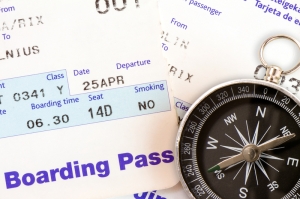
Not only do you not want every person with access to your social media accounts to know that you’re away from home (hello, burglars!), you also don’t need your followers (or lurkers) to know where you are in real time. This can invite all kinds of unwanted attention and danger. You should also avoid posting any pictures with personal information, like your boarding pass or passport, to social media. These photos might look fun on Instagram, but they also give cyber predators easy access to your secure data.

3. Don’t use public Wi-Fi to access financial information or make online purchases. It’s very easy for hackers to steal information from public internet servers. Furthermore, you should never leave your laptop or cell phone in a vulnerable position (i.e. at the breakfast table while you run to the bathroom or on your beach chair while you take a dip). This might seem like common sense, but it’s easy to let your guard down when you’re on island time!

4. Use a prepaid debit card specifically designated for traveling. A prepaid travel card will help you stay within your budget while you’re on vacation and keep your personal information safe. Prepaid travel cards, are not linked to your checking or savings account, so if your card information is compromised, you’ll have less of a mess to clean up down the road. Another bonus: you won’t have to worry about foreign ATM skimmers and various other threats to your financial data while trying to relax on vacation.

5. Research, research, research. It’s important to learn the ins and outs of your destination and do some digging to find out what areas are safe and what areas should be avoided.  A good place to start? Read hotel reviews online to see what neighborhoods and destinations other travelers recommend. If a location seems unsafe or makes you feel uncomfortable, you should leave right away. Download the State Department’s Smart Traveler app (travel.state.gov) and sign up for the State’s Smart Traveler Enrollment Program (STEP), which allows U.S. citizens who are traveling abroad to enroll their trip with the nearest U.S. embassy or consulate.

Above all – enjoy your trip and have fun. Just be prepared before you go and plan ahead!

Article Source: Naomi Anderson for CUInsight.com

Teach Your Kids to Take a Stand — A Lemonade Stand

Long before Beyoncé transformed it into a cultural touchpoint, lemonade was the commodity of choice for childhood business ventures. Perhaps you had a lemonade stand of your own, or maybe you just knew someone who did. Either way, the memories of ice-cold refreshment probably ride on a warm wave of nostalgia. If your enterprise was especially successful, you might even hear a faint “cha-ching” as you reminisce.

Fast forward a decade or two, and now you find yourself juggling the demands of family, friends, and career. Thanks to the latest technology, it’s easy to let your kids spend their summer vacation drifting along on a digital stream of Snapchat streaks and Fortnite marathons. With the dog days of summer approaching, you have a perfect opportunity to shake up your child’s summertime routine with a little old school entrepreneurship. It’s time to bring back the lemonade stand!

Let your kids in on the fun. When you were young, running a lemonade stand didn’t feel like a job—it felt like freedom. So, don’t worry that encouraging your children to work will somehow rob them of their summertime fun. The venture can be fun, and the lessons they learn from operating a small business can last a lifetime.

Goal setting

Believe it or not, this one comes pretty naturally to kids. If you ask them what they want to do with the money they earn, they’ll probably have at least one goal already in mind. It may be a video game, a bike, or new clothes, but whatever it is, their motivation won’t be hard to find. When they finally save up enough to buy what they want, the sense of accomplishment will be something you can build on for the rest of their life.

Entrepreneurship

Operating a lemonade stand is an excellent way to help your children learn that it costs money to create something. After all, lemons and sugar aren’t free. Understanding economic concepts like cost of goods and profit margins, will give your kids a valuable perspective with real-world applications. As they plan their drink prices, let them decide what to charge. Positive or negative, the lessons they learn from experience will help them with future budgeting.

Responsibility

Like many things in life, lemonade stands are super fun at the beginning! But after a few hours sitting in the sun or waiting out a thunderstorm, there’s a pretty good chance your little entrepreneur will want to close up shop. While it may be frustrating (for you and them), this scenario provides an excellent opportunity to teach them that you can’t just walk away when you get bored. And let’s be honest, we can all use this reminder from time to time, can’t we?

Creativity

Challenge your child to think about how to separate themselves from their competition. (Of course, this may be hypothetical competition since modern-day lemonade stands are probably few and far between). Depending upon their age, your little one may focus on colorful sign design at first. This focus is understandable, since making the sign is half the fun. But beyond that, feel free to offer creative suggestions. Could they provide a sugar-free alternative? Maybe offer an iced coffee alternative to appeal to more customers? How about spreading the word with a social media post? Should they accept payment through Venmo or PayPal, or just keep it cash only? Like a child’s imagination, the options are limitless. So is the fun!

At this point, you may feel like opening up a lemonade stand whether your kids are interested or not! Channel that excitement and energy into helping them see the fun-filled potential of the idea, and don’t be afraid to get in there and help them when they need it. The time spent together will be even more valuable than the money earned and the lessons learned.

Happy summer lemonading!

Can’t Do a Vacation This Year? 11 Ideas for a Great Staycation

It’s that time of year again. The kids are out of school and you really want to spend time with them and make wonderful memories, but a vacation is out of the question. You can’t get away and, even if you could – it’s way out of your budget.

For a beautiful time creating memories with your loved ones, you need only two days and some imagination. Try these staycation ideas for a grand time (without spending a grand).

1. Hit the road in your own city, armed with cameras and snacks.

If you’d be willing to visit a strange town, pretend yours is just that. If you live in or close to a metropolis, it’s easy — there are always places you don’t often see that should be fun to explore. If you live in a rural area, hit Google Maps and then the road. Fill your time with laughs, snapping goofy pictures everywhere you go.

2. Go on a scavenger hunt.

Make a list for the family and get on the road with clues to help you find everything on it. The more obscure you get, the longer the hunt will take – great for bigger kids, but not so fun for the little ones, so plan accordingly.

3. Go to a motel in a neighboring city.

If your timing is flexible, bid on rooms via Priceline, or try calling and negotiating lower rates with the manager before accepting whatever they offer. After all, the goal is to save while you stay, right?

4. Make it a movie marathon day.

Choose flicks that the whole family can watch together and enjoy. Start after breakfast and have a little family exercise break in between. Oh, and make it a PJ day to really relax and enjoy!

5. Drive to anywhere.

Don’t use a map. Don’t have a destination. Just plan to drive in a direction for X hours, then stop and explore and stay where you are. If you can spend the night, BONUS! If not, that’s okay. Have fun exploring your new locale, taking pictures and snagging souvenirs.

6. Go to a waterpark.

It’s likely that your city or one nearby, has a waterpark. What better excuse to jump in the water than saving money? If you can’t stay on vacation for a week or so, a day at a waterpark may be the next best thing.

7. If you can’t park it, raft it.

River rafting is another amazing excursion, and one that’s often cheaper than waterparks. Check for restrictions on ages if you have little ones, but many river dock rental places have options for the younger clientele too.

8. Go camping.

Even if you can’t head to a nearby mountain range (bonus points if you can!), you can still hang with the neighbors and have a neighborhood camp out at home in the backyard. Or go it alone with just you and your loved ones. Either way, pack up the tent and make a rule to not go inside for anything.

9. Host your own neighborhood field day.

Make it complete with hilarious games and amazing prizes — and don’t forget the pictures! Top off the afternoon with a cook out and ice cream sundaes.

10. Call for a Blackout Day (or weekend).

Turn off all electronic devices for at least 24 hours. Spend the entire day focusing on the fun you’re having with your favorite people.

11. Call in a cleaning service.

Why do we love going on vacation? We love feeling pampered. But if you can’t go and be pampered, bring the pampering home to you. Check Care.com or Craigslist for a cleaning service that’s reasonable. Let them worry about the dusting, sweeping, mopping and bed making for a week.

Article Source: Vincent King for moneyning.com

4 Tips for a Budget-Friendly Plan B Getaway

Maybe you’d like to plan a vacation this summer, but you don’t exactly have several hundred or thousand dollars just laying around right now, not to mention other expenses like meals, souvenirs, and the like. Or perhaps you don’t want to spend your savings on a “non-essential” trip at the moment. Whatever the reason, a “Plan B” getaway can help keep your financial goals on track, and can still be just as fun as an extravagant vacation.

1. Don’t view the decision (or need) to opt for Plan B as a sign of financial failure; see it as setting yourself up for greater financial freedom in the future.

It can be disappointing to pass up your first idea for the perfect getaway, but try to see the positive side: by using wisdom and self-control in the present, you’re positioning your finances to be in the place where you can spend money on the things you enjoy without guilt or debt.

2. Look for frugal travel advice to maximize Plan B and to keep it under budget.

Sure, you’ll save money by not splurging on your first plan, but don’t fall into the mental money trap of anchor price comparison. Even if Plan B looks much cheaper than Plan A, you might end up going over-budget because you think you’re saving money. When you decide where your Plan B destination will take you, browse through Pinterest articles written by people who have visited the destination. Travel websites and blogs are another great resource, and can help you maximize your time and eliminate overly-touristy destinations too.

3. Take a road trip and skip the hotel.

Hotels can be a waste of money unless it’s absolutely necessary to stay overnight. Since you hardly spend any time in the room if you’re sightseeing, you probably won’t be taking advantage of all the amenities you paid for if you book at a nicer hotel. One possible exception is when the hotel is your destination. If that’s your main expenditure, then by all means, enjoy your luxury!

Day trips are another idea. It might mean getting up a little earlier, driving home a little later, and drinking a few extra espressos, but you’ll save money and be more motivated to fit in the most meaningful experiences you can.

Don’t think there’s anything interesting enough within a day’s journey of where you live? Check out your state’s tourism website and see if there’s something you might have missed.

4. Take to nature — it’s free.

Minus the fees you might need to pay for admission to a state or national park, nature is free and much more personal than a cookie-cutter tourist experience.

Planning a budget-friendly getaway means getting a little creative and doing a little research, but these very things could ultimately lead to an experience of a lifetime. In the end, it’s not how much you spend on a vacation that makes it’s great – it’s the memories you make.

Article Source: Jessica Sommerfield for moneyning.com